While permits are always a bit of a hassle, I totally understand why permits have been implemented as this is such a popular part of Colorado.
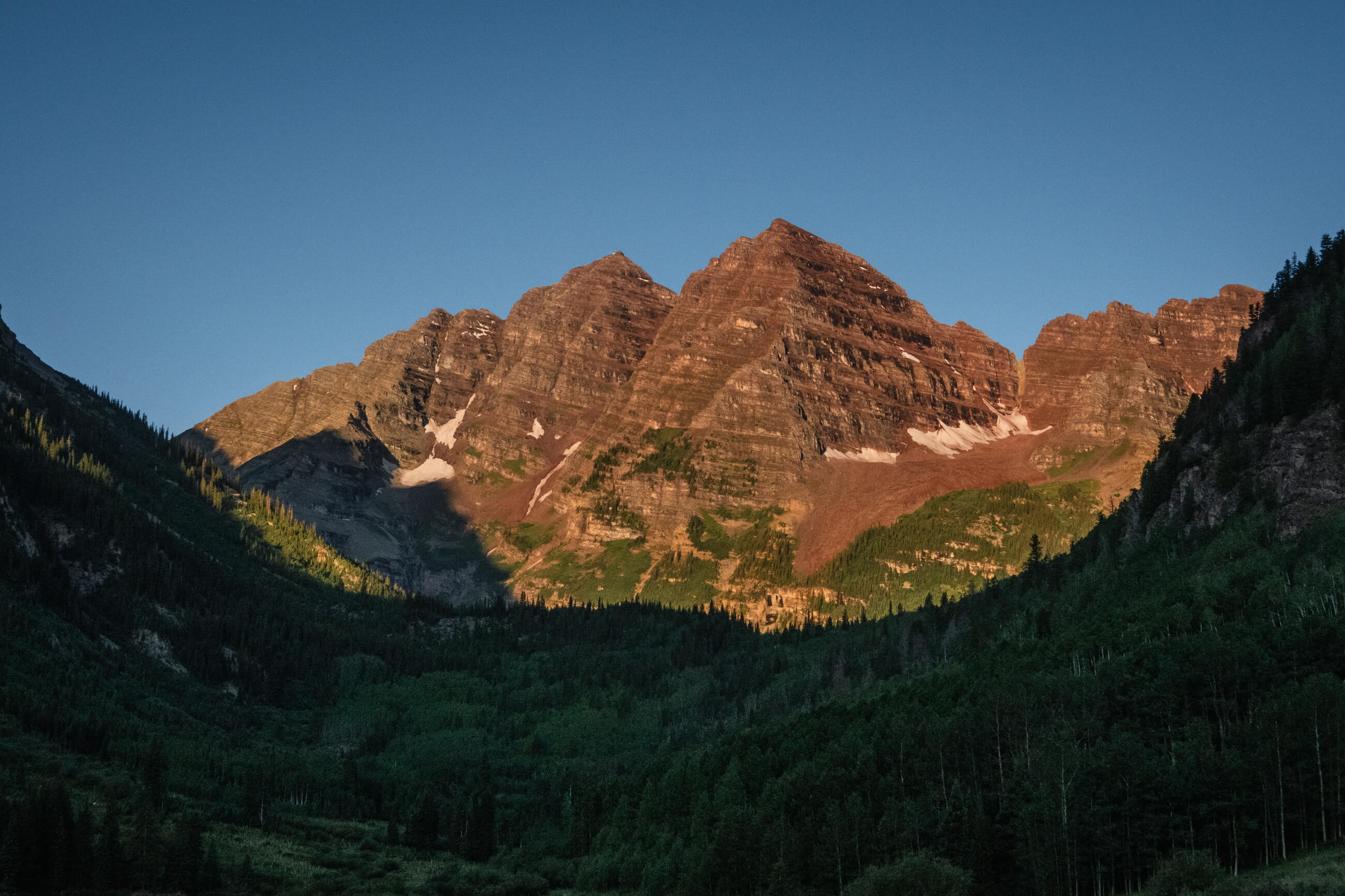
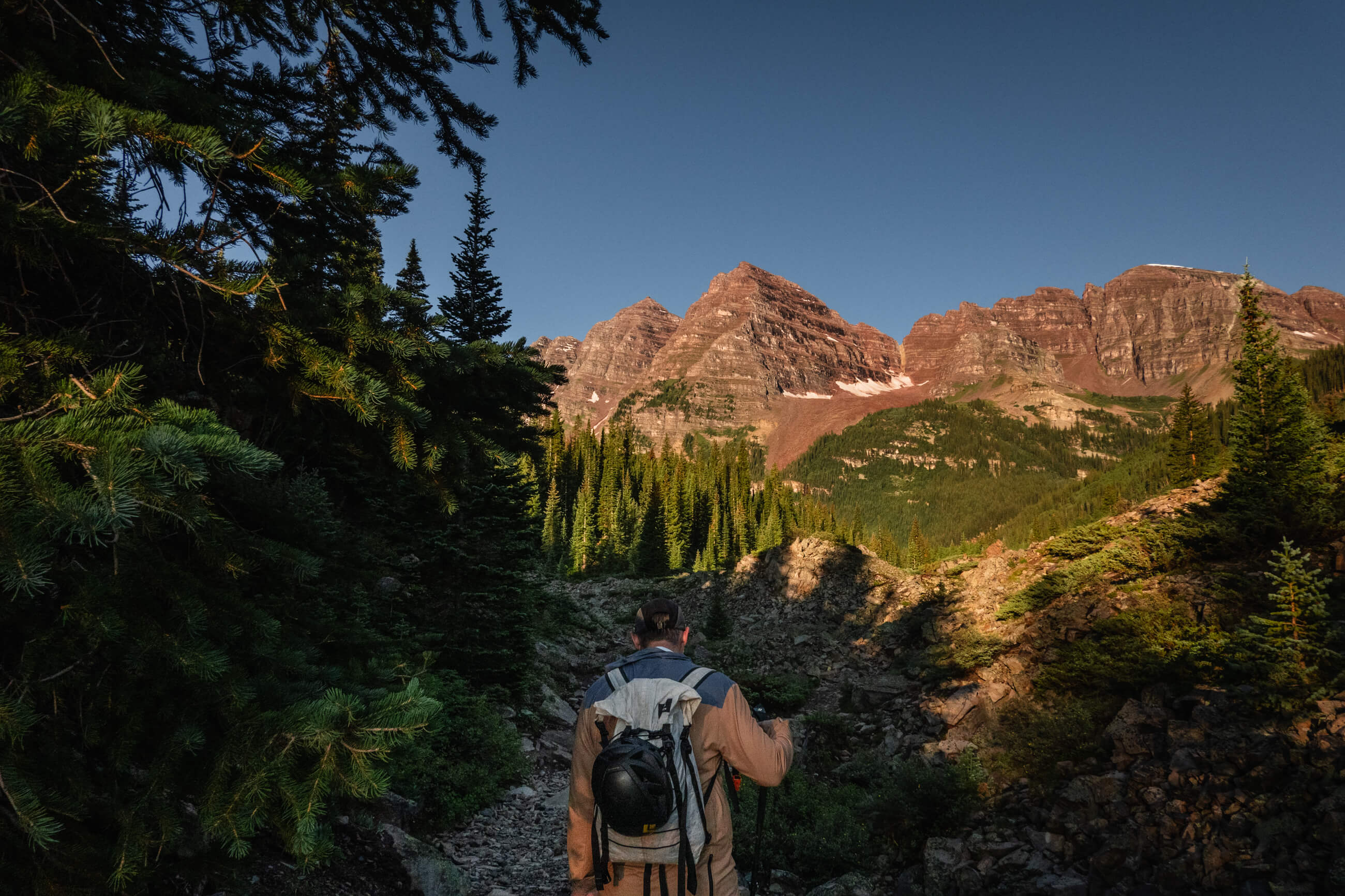
Maroon Bells are some of the most photographed mountains in the state and the view after just a short walk from the drop off to Maroon Lake is pretty sweet.
The hike is comically steep.
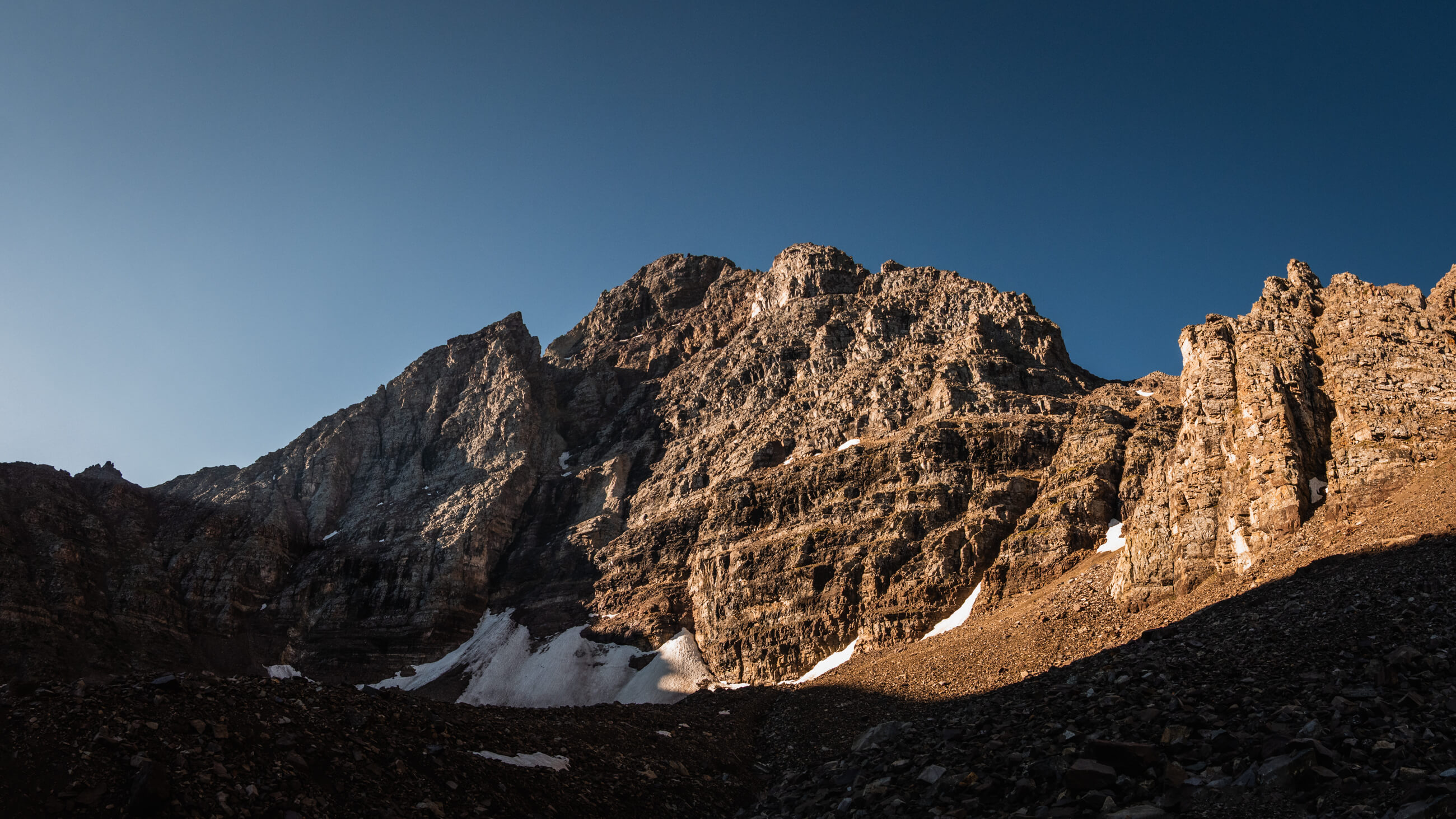
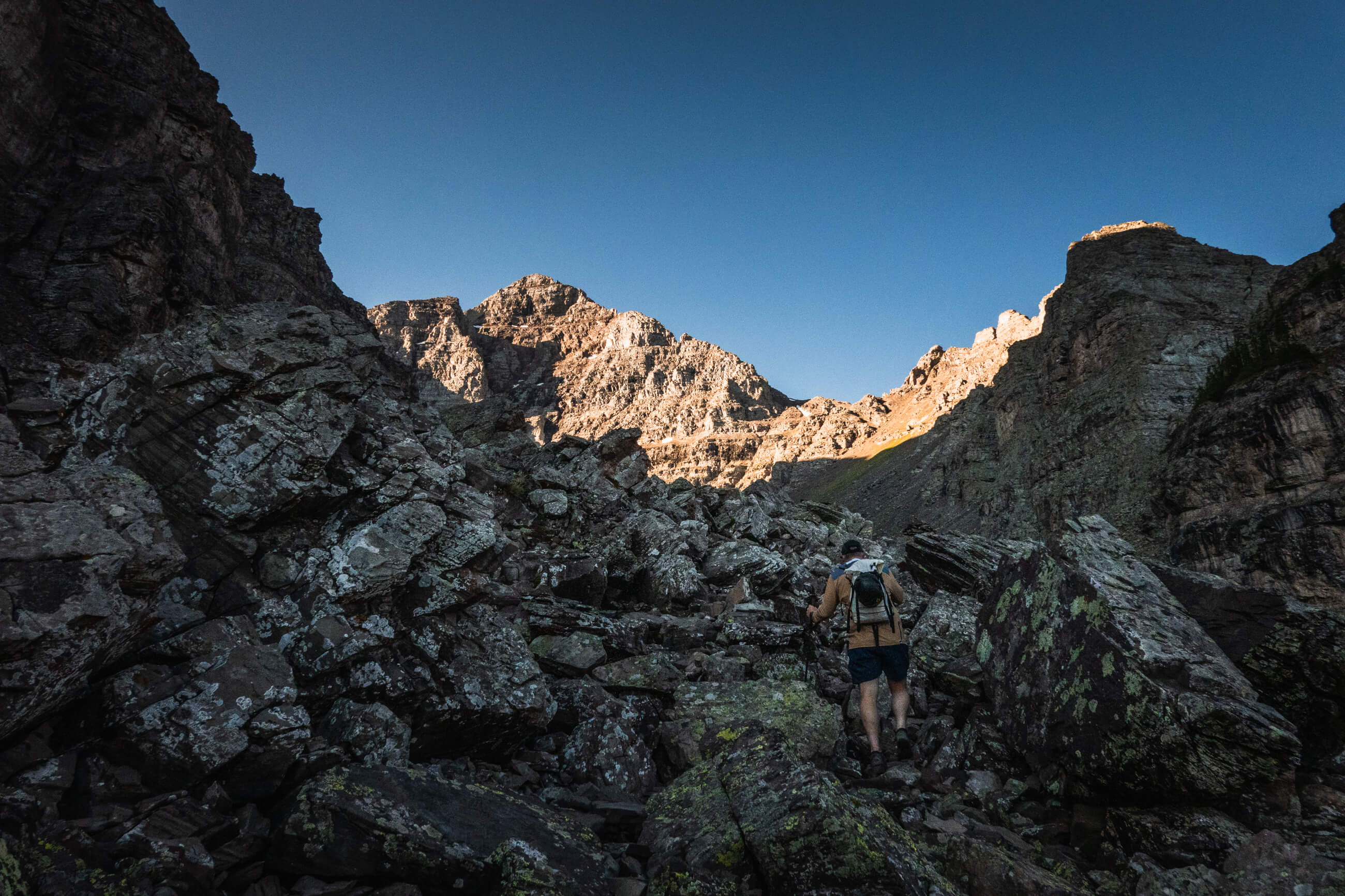
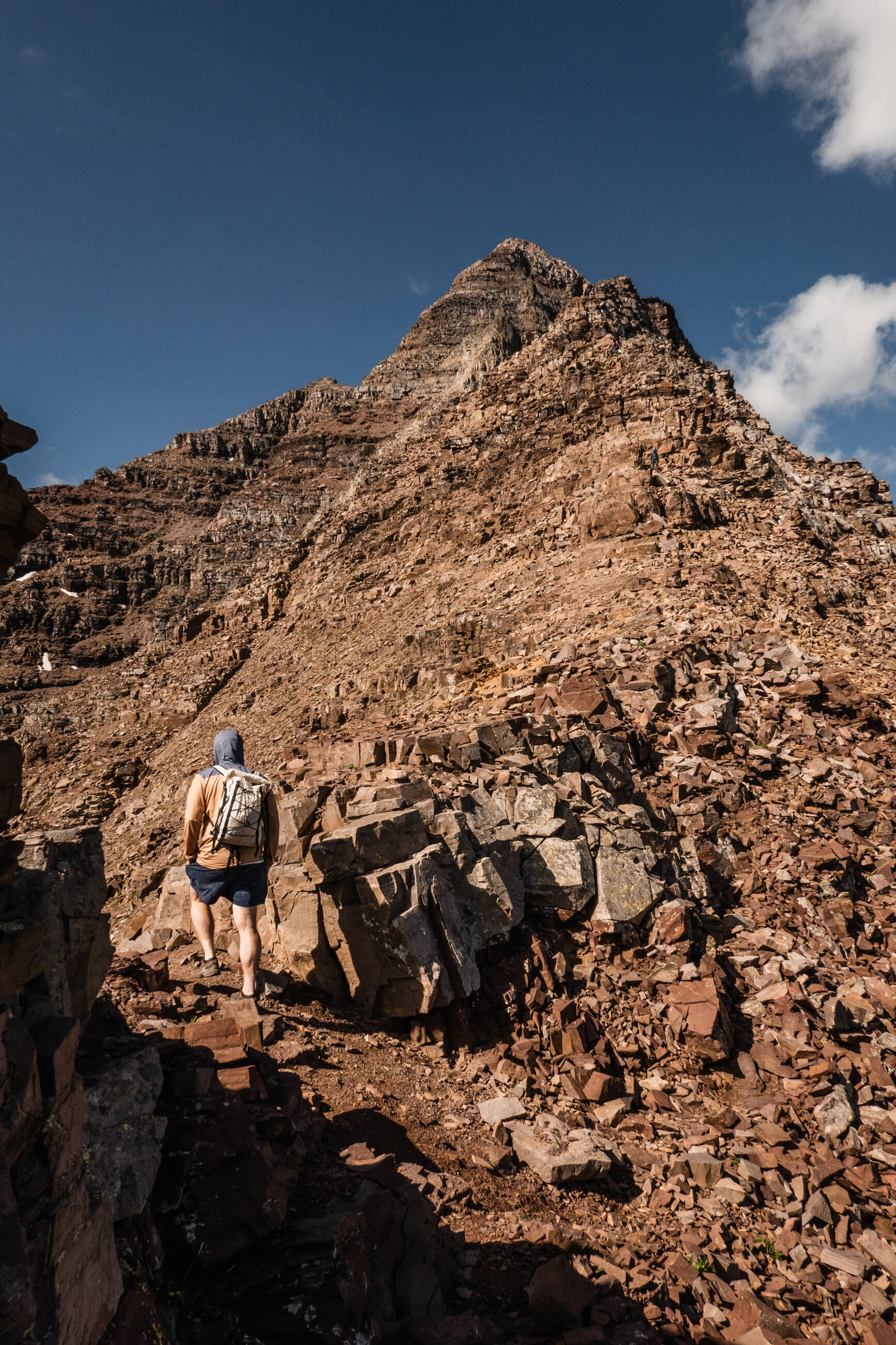
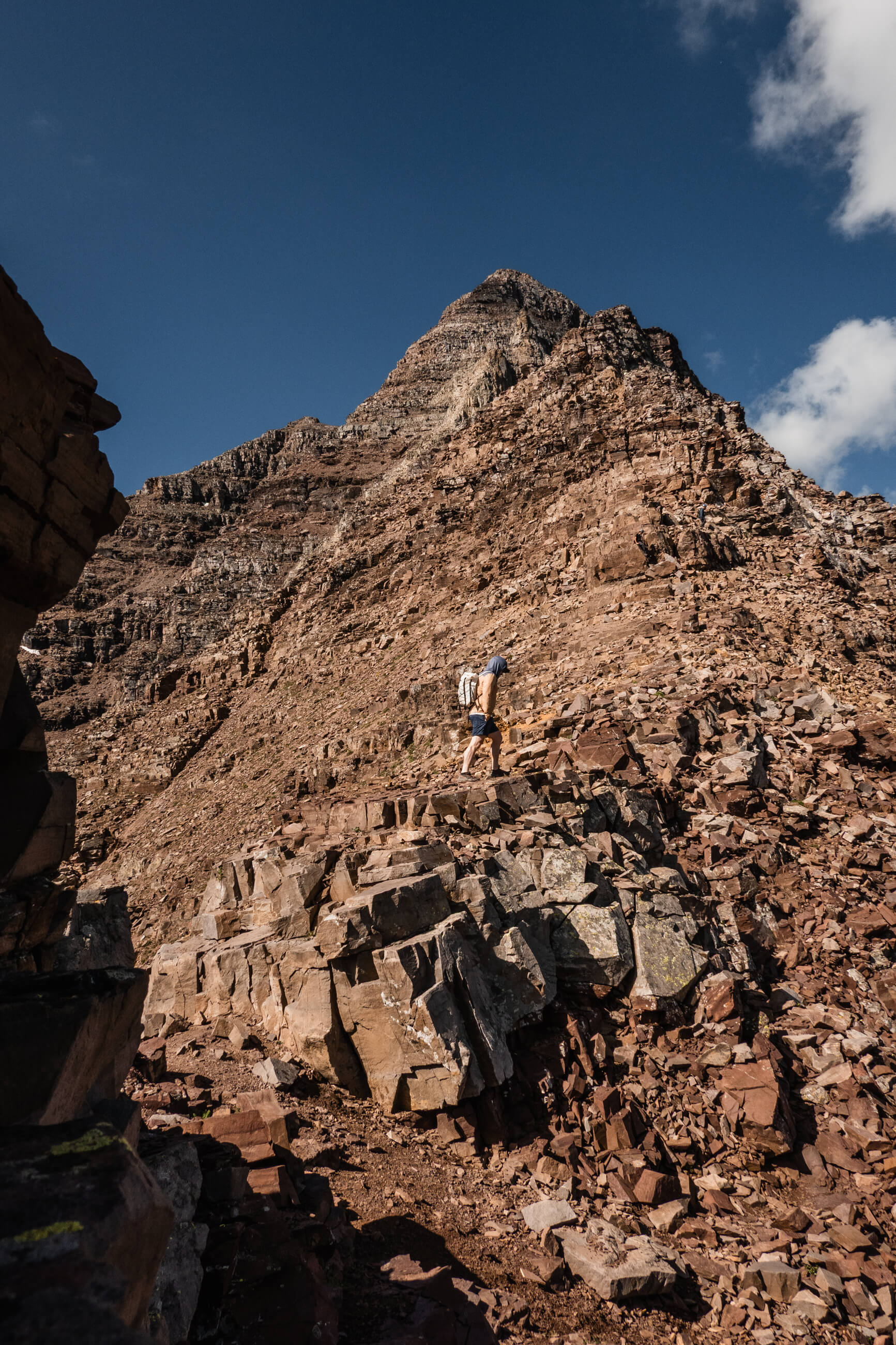
It’s a little over 7.5 miles with 4,500 feet of gain to the summit, so you’re ascending very quickly right from the lake. After crossing the boulder field you reach the amphitheater where you have your first view of the steep, rocky walls leading up to Pyramid Peak. Yikes.

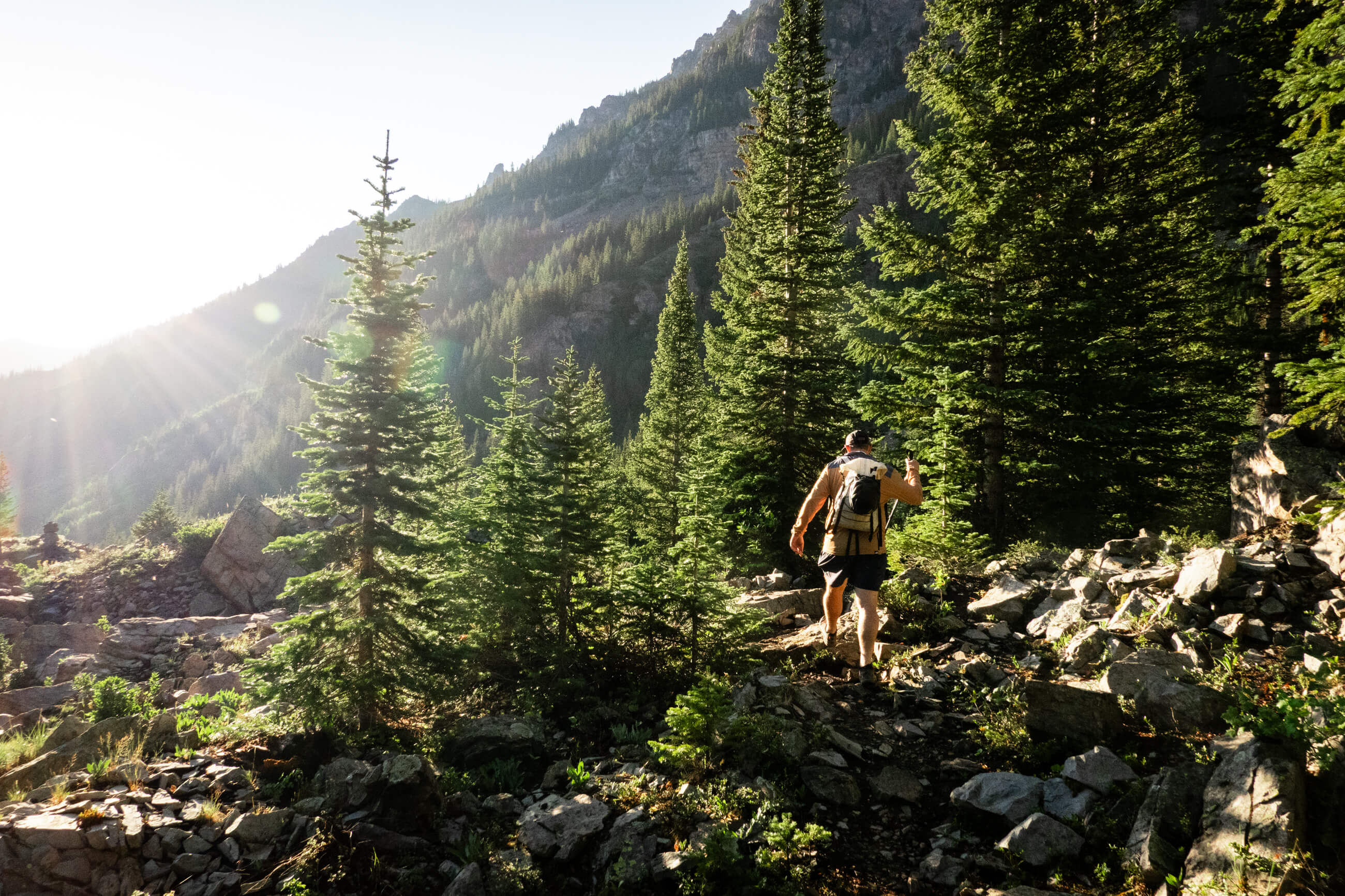
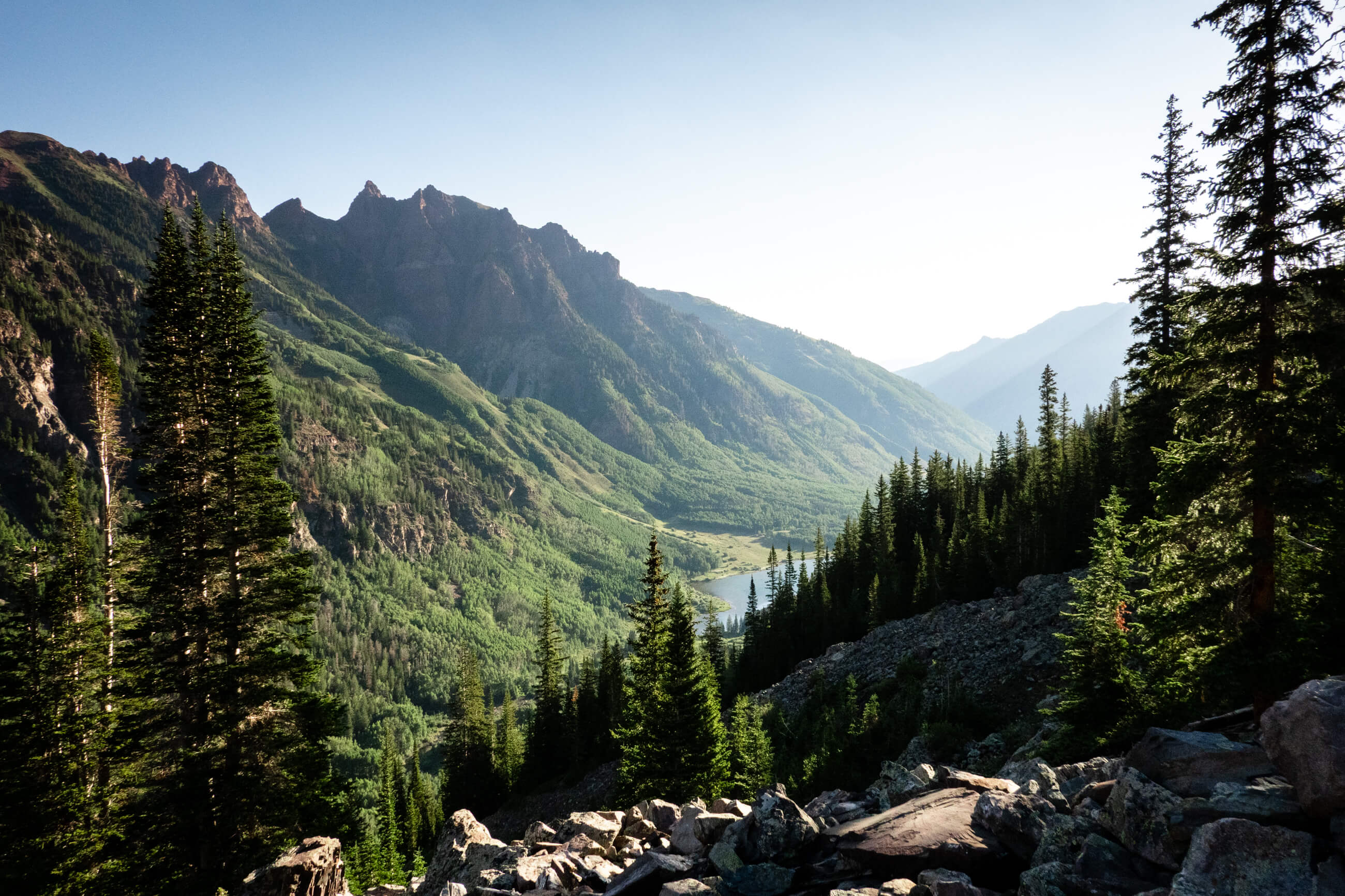
The Maroon Bells at sunrise from Maroon Lake (image 1), Brian making his way up to the boulder field (image 2)
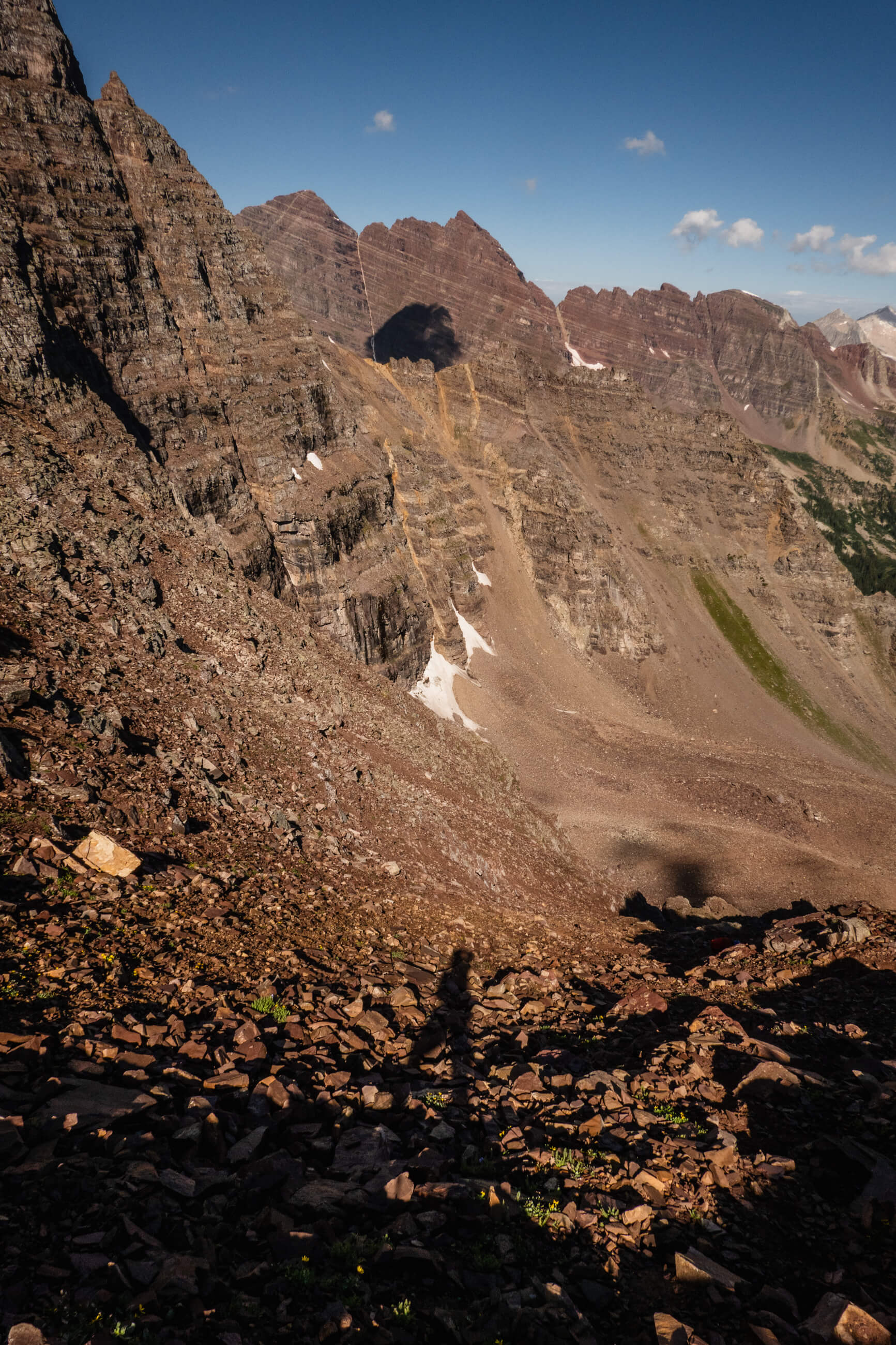
You continue up the wall to climbers left from the amphitheater. This climb up to the saddle honestly sucks. It’s a bunch of loose rock and dirt and you need to watch you step. The hike up from the amphitheater to the saddle takes you from 12,000 feet to 13,000 feet.
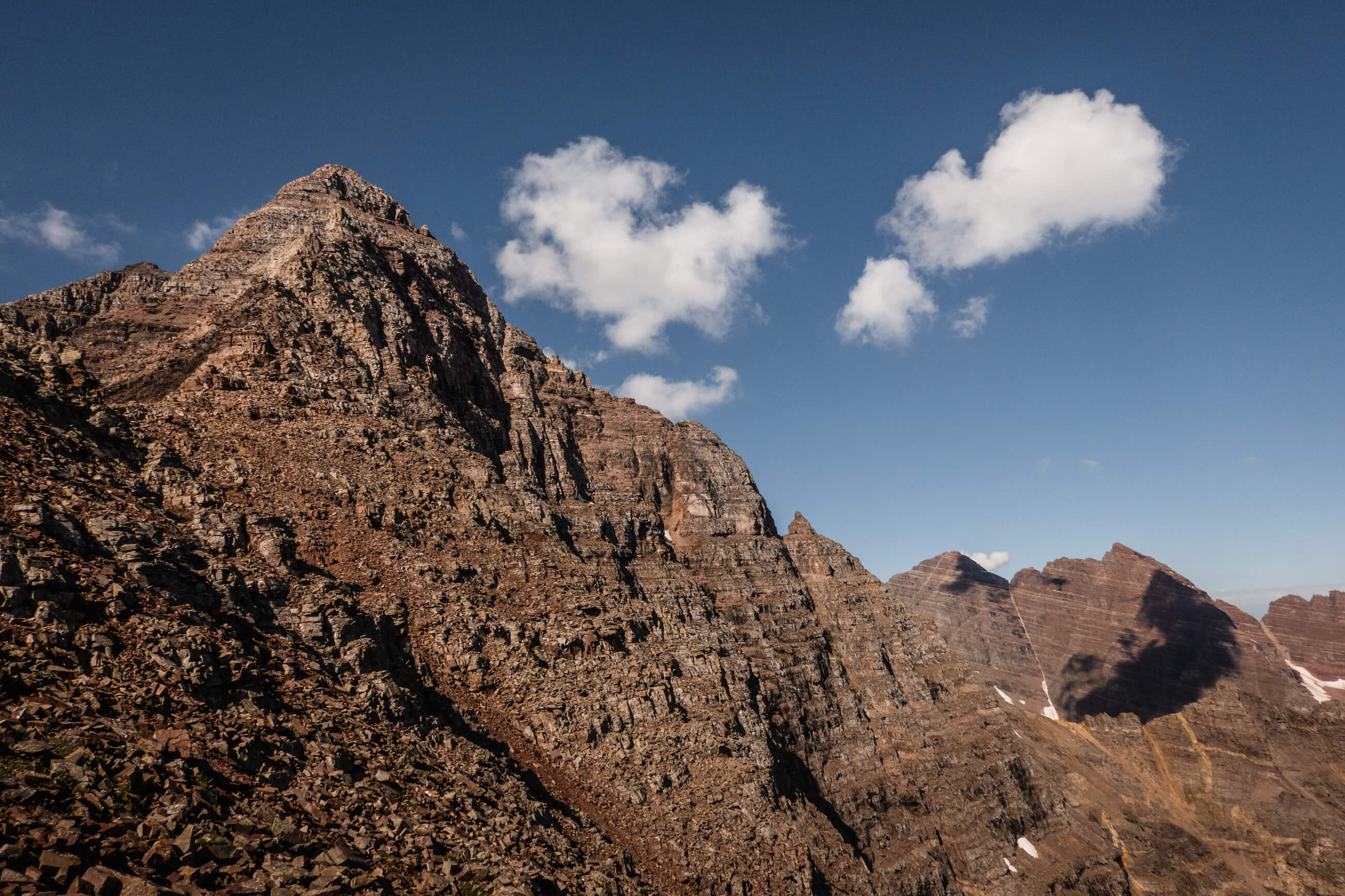
Once on the saddle, you have the first clear view of your remaining path all the way up to the 14,025 foot summit.
It looks pretty terrifying from here and the famous green rock looks nearly vertical (it isn’t). The first bit up and over the first pillar is pretty easy to follow and maneuver. We made our way around some ledges and before we knew it we were climbing down to the leap of faith. We made the leap no problem, it’s fun and really not a big jump.
Immediately following the leap you carefully pass around a couple really tight ledges, but the handholds are super solid. The gully that follows is about two steps wide but given the loose dirt you have to cross I thought this was one of the scarier moments of the day, especially on the descent after some of the goats messed up the path.
Here we found ourselves at the base of the green rock. It’s hard to miss as it looks like a green stripe on the side of the mountain.
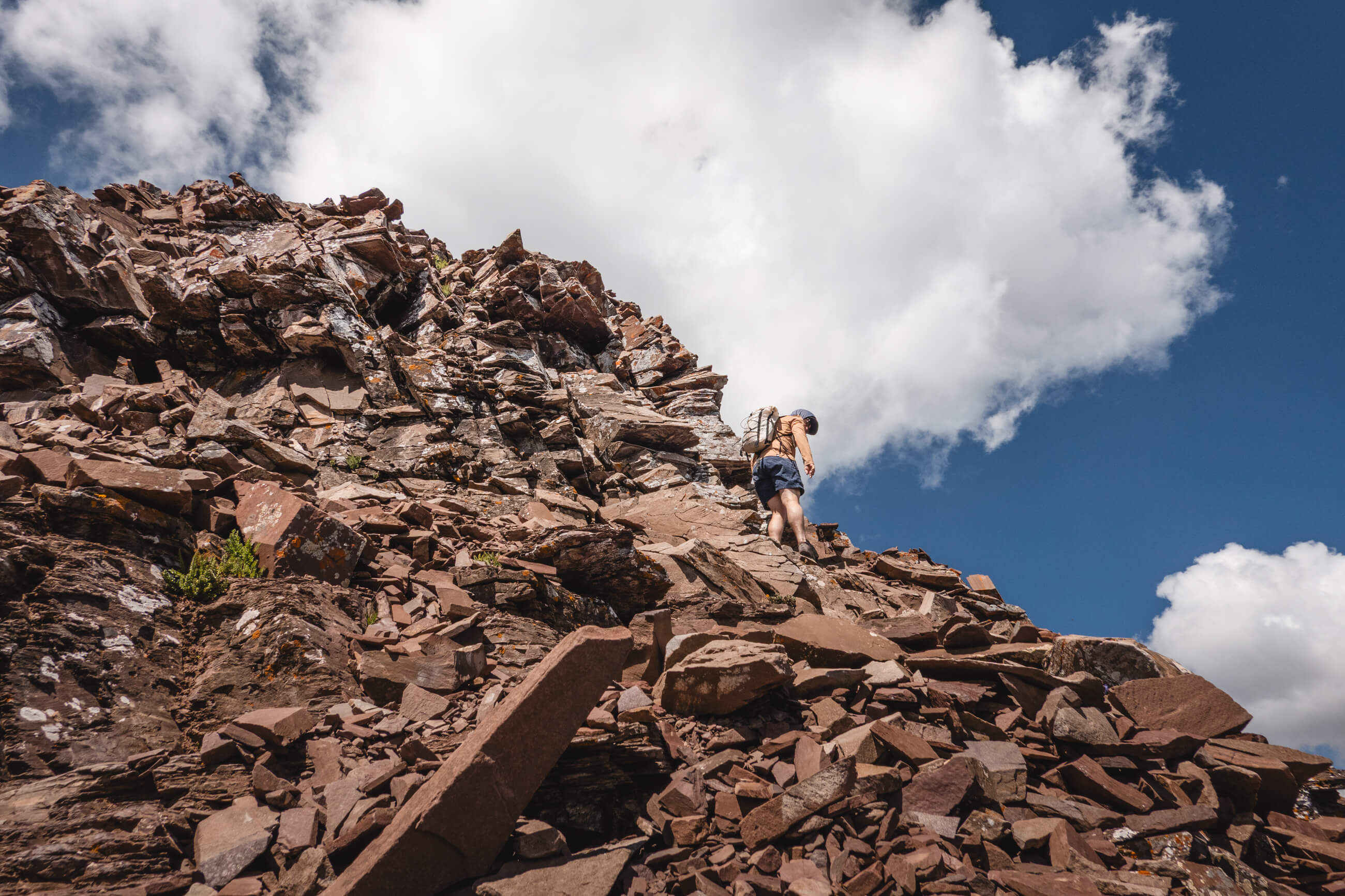
Staying climbers right as you ascend the green rock is advisable and I don’t think it exceeds class three. There are lots of good hand and foot holds and while there are a few loose rocks, I don’t think it exceeded the difficulty or fear factor of the home stretch on Longs Peak. After a few hundred feet as you start running out of green rock you want to look left for the exit (which is a fairly large ledge with a cairn).
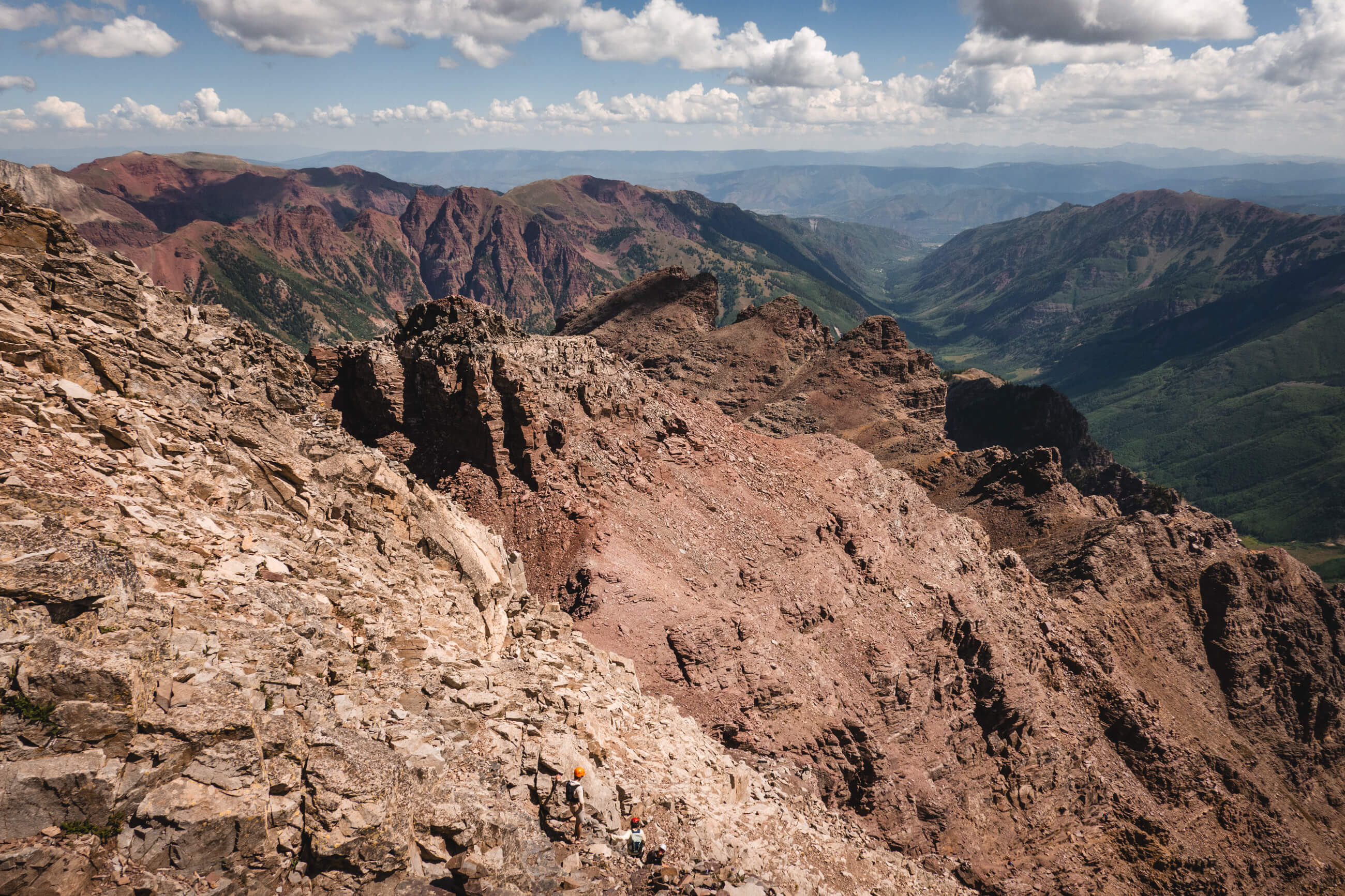
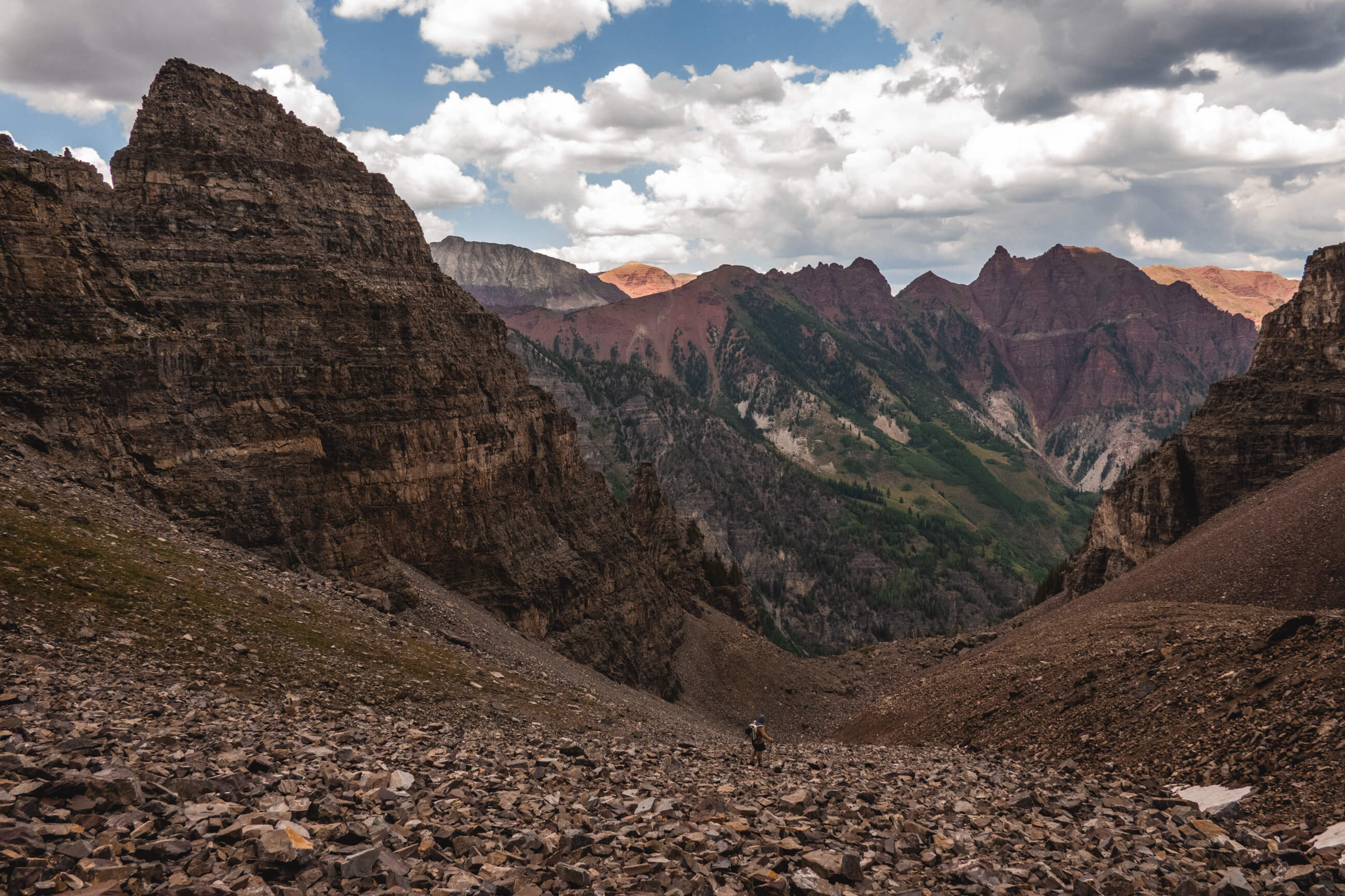
Brian hiking up to the boulder field (image 1), Looking back down the gulley from just below the saddle (image 2)
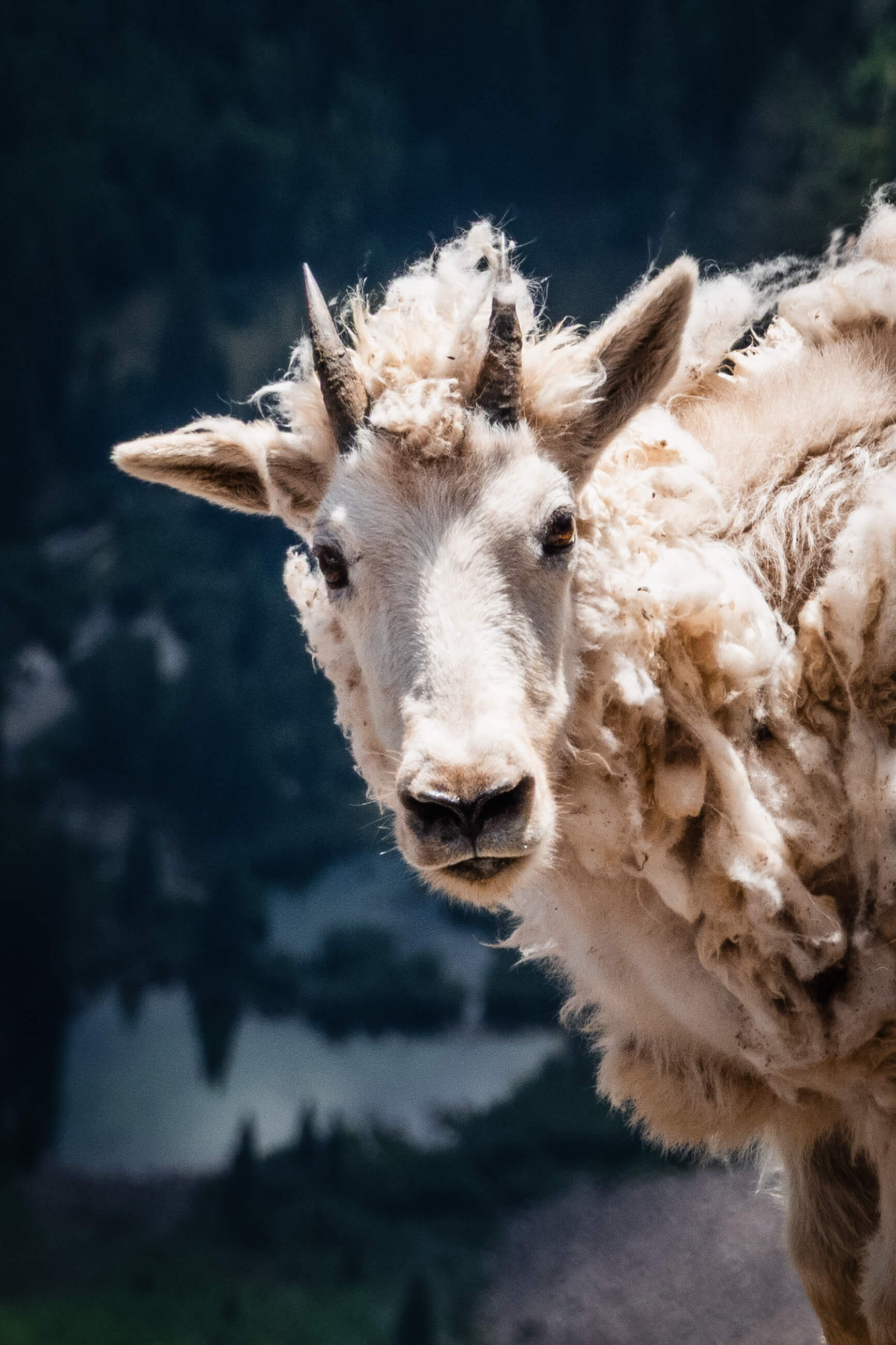
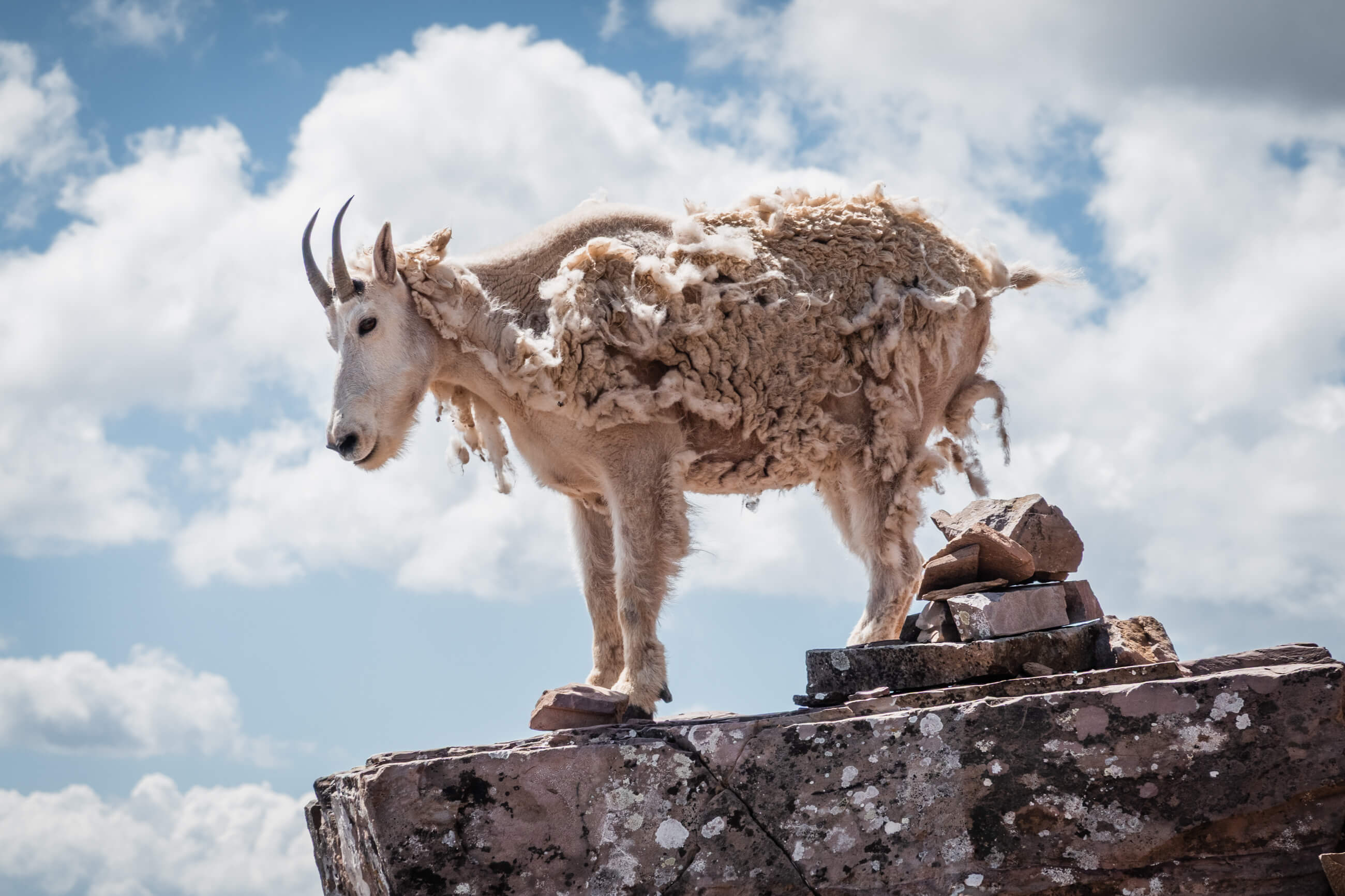
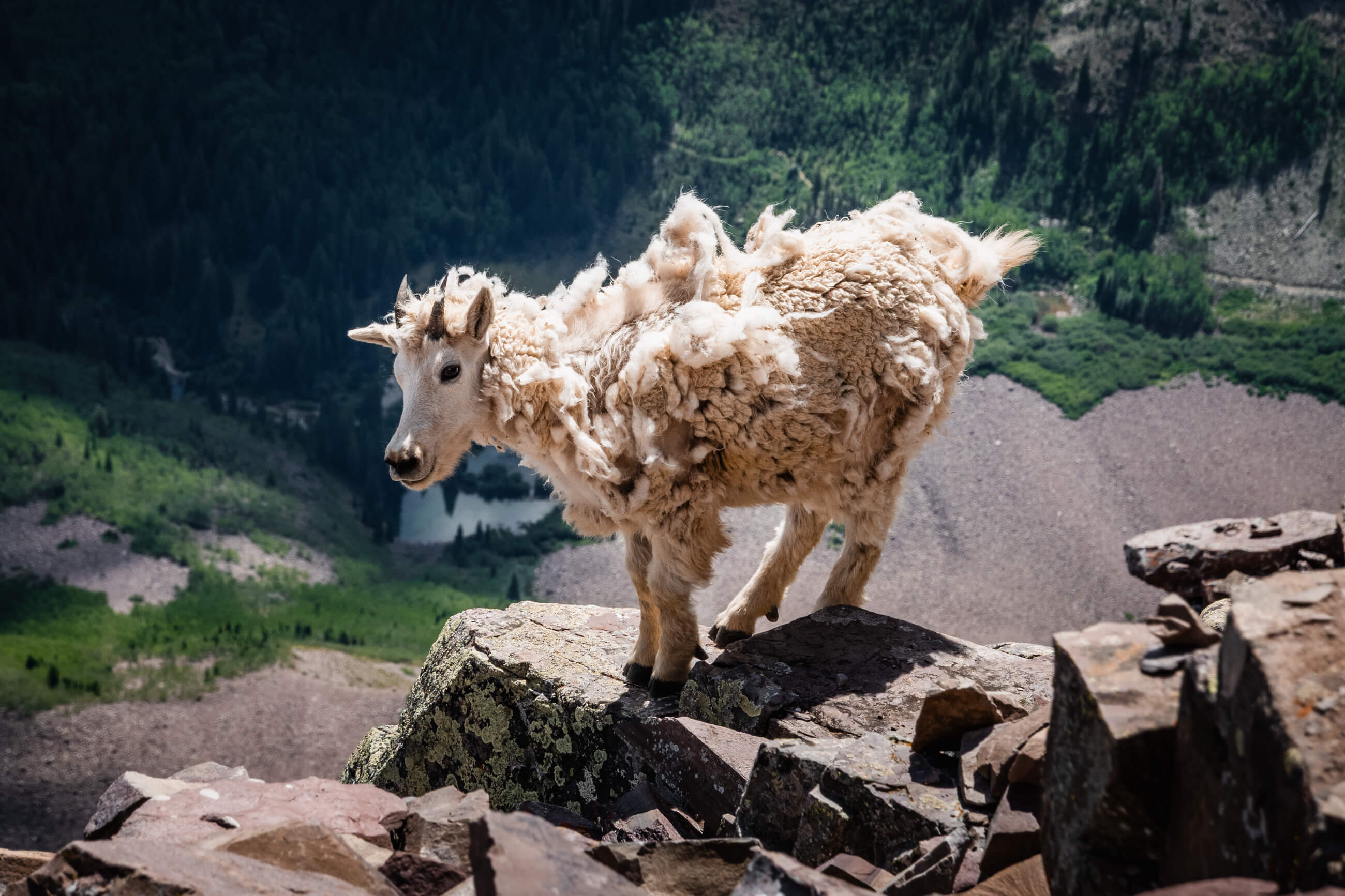
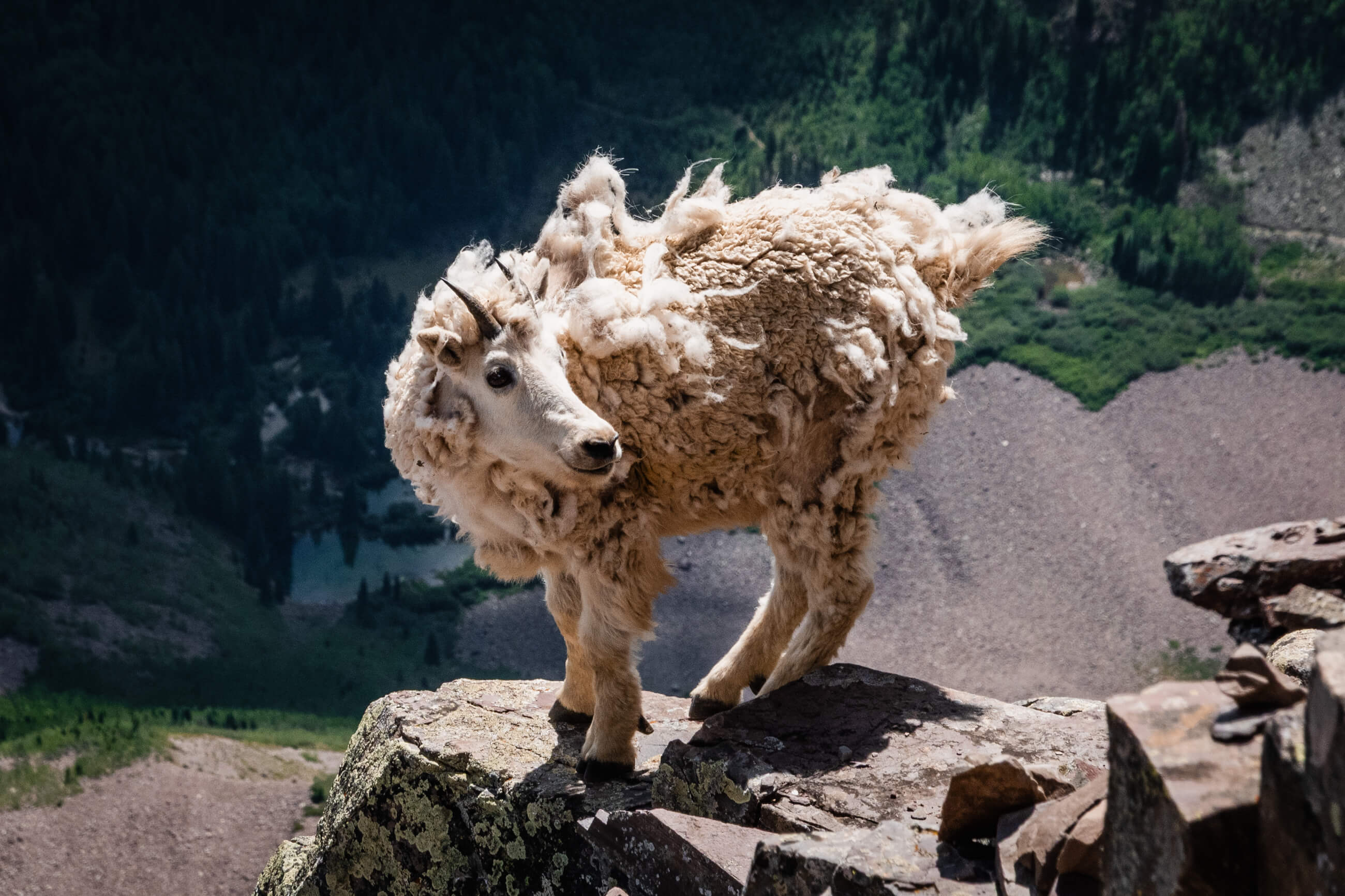
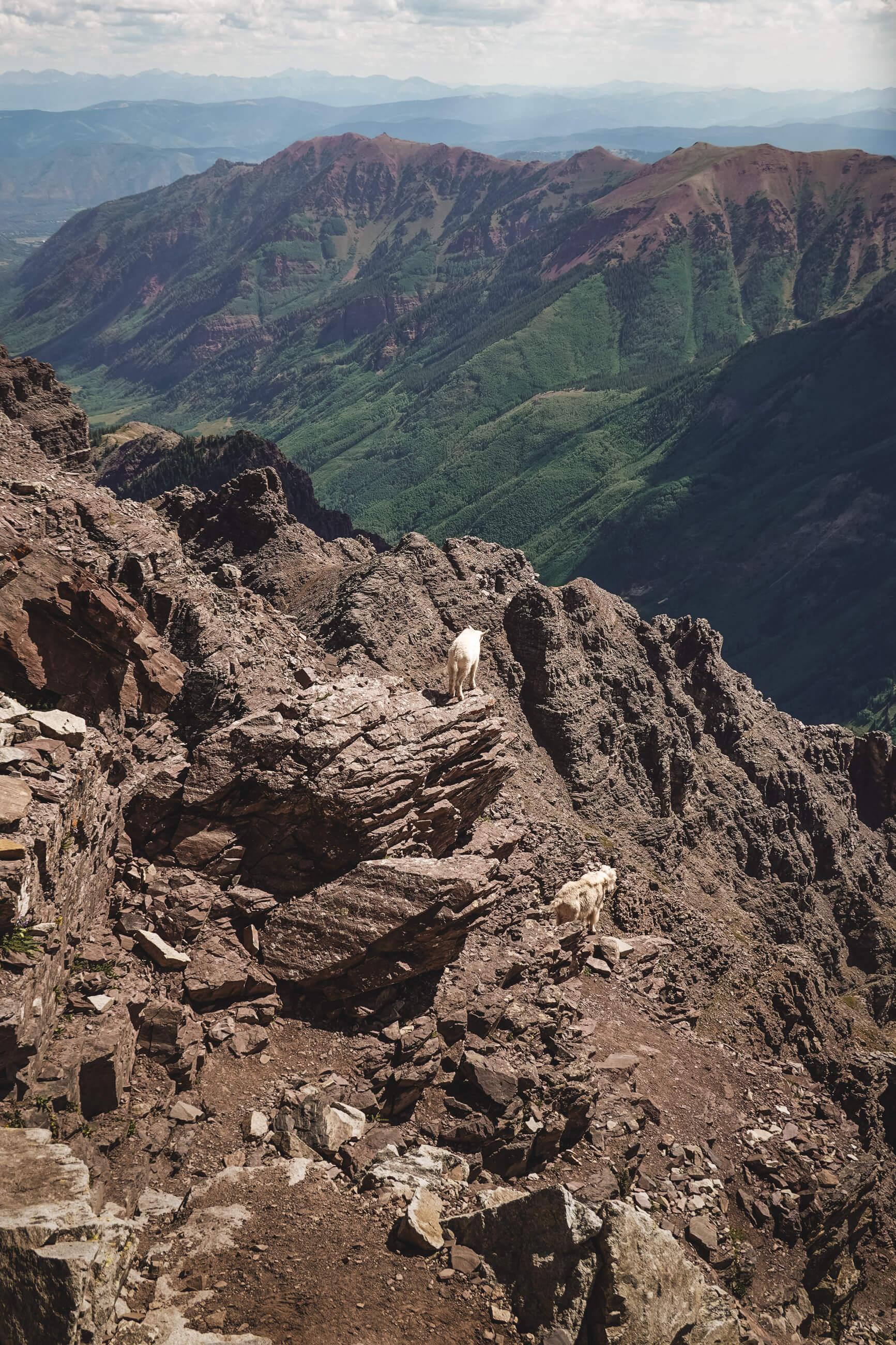
Immediately after exiting the green rock a mother goat and her and baby were blocking our way on one of the ledges so we had to climb up around them. The goats are all over the summit section and they are known to kick rocks down as they hop around. It’s wild how comfortable they are maneuvering around up there.
After the green rock, you really only have about 300 feet left and the route is a bit of a “choose your own adventure”.
Route finding is a little convoluted and there are a couple tricky moves (I suppose these would be categorized as class four) but it goes. The last 100 feet definitely feel like the steepest, most intimidating, and most exposed part of the day. I would definitely recomend referencing the
14ers.com photos and route description in advance (and saving to your phone).
Be sure to tread carefully and test all of your holds before weighting them. Even then try not to fully commit all your weight to any one hold. We had a couple scary moments feeling rather large rocks shift in our hands as we tested them out.
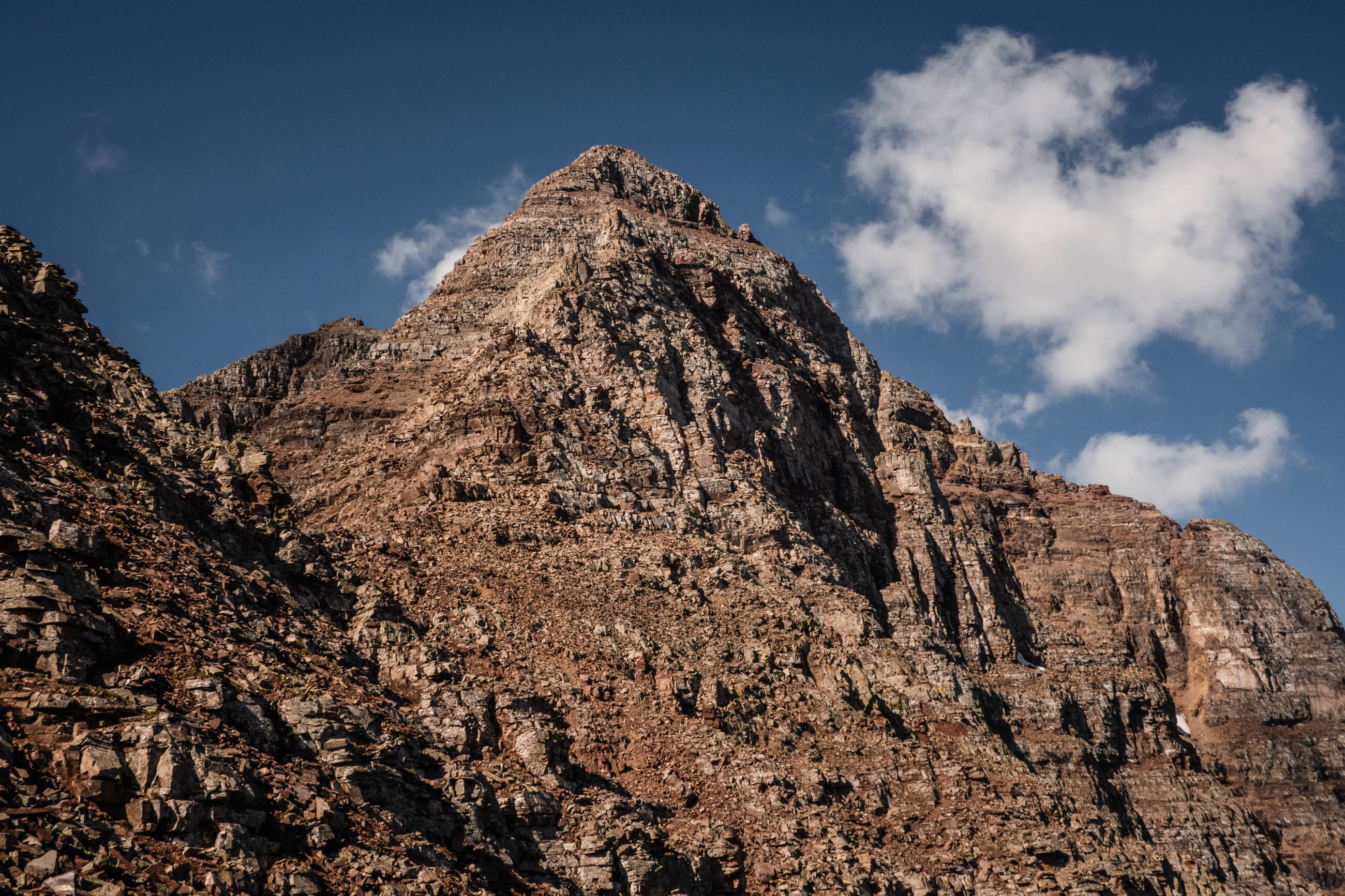
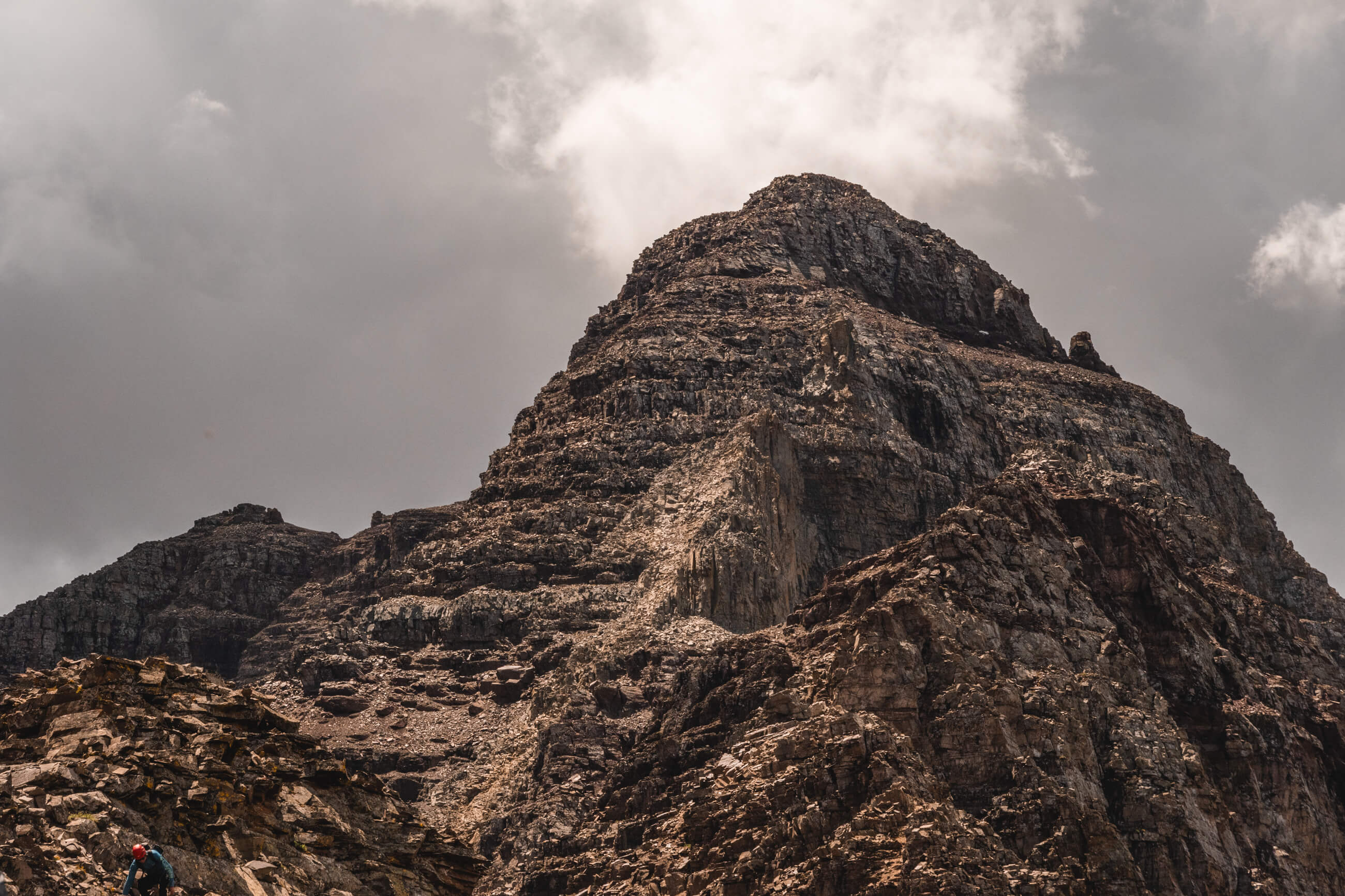
A look at the summit block of Pyramid Peak
We made it to the summit and saw more goats and had some amazing views of the surrounding Elk Range (especially Marron Bells).
The descent sucks. It’s scary and steep, especially the top ~150 feet. This was the most mentally draining and slowest going portion of the day to get back down to the green rocks. There are some pretty steep ledges you need to carefully climb down. We were careful to spread out in certain sections and tuck around ledges as the other climbed down to avoid kicking rocks down on each other. I would suggest this strategy.
We were back through all of the tricky obstacles fairly quickly, and the green rock was a much easier descent than the top. The boulder field seemed so much longer than on the way up, but we were back to the parking lot around 3:30 for the shuttle back to town. We celebrated at Buck Tavern, the best deal on pitchers of Coors Banquet in Aspen.
Looking back down from in the green rocks with a couple of goats enjoying the views.