Dragon’s Tail
Couloir
Dragon’s Tail
Couloir
Colorado
March 28, 2026
Dragon’s Tail Couloir is a classic alpine climb/ski line in Rocky Mountain National Park. It ascends directly up from the picturesque Emerald Lake.
Access to the base of Dragon’s Tail Couloir is an easy 1.5 mile hike from the Bear Lake Trailhead, one of the most popular hikes in the park that requires a timed entry during the months of May -October (or drive in before 5am).
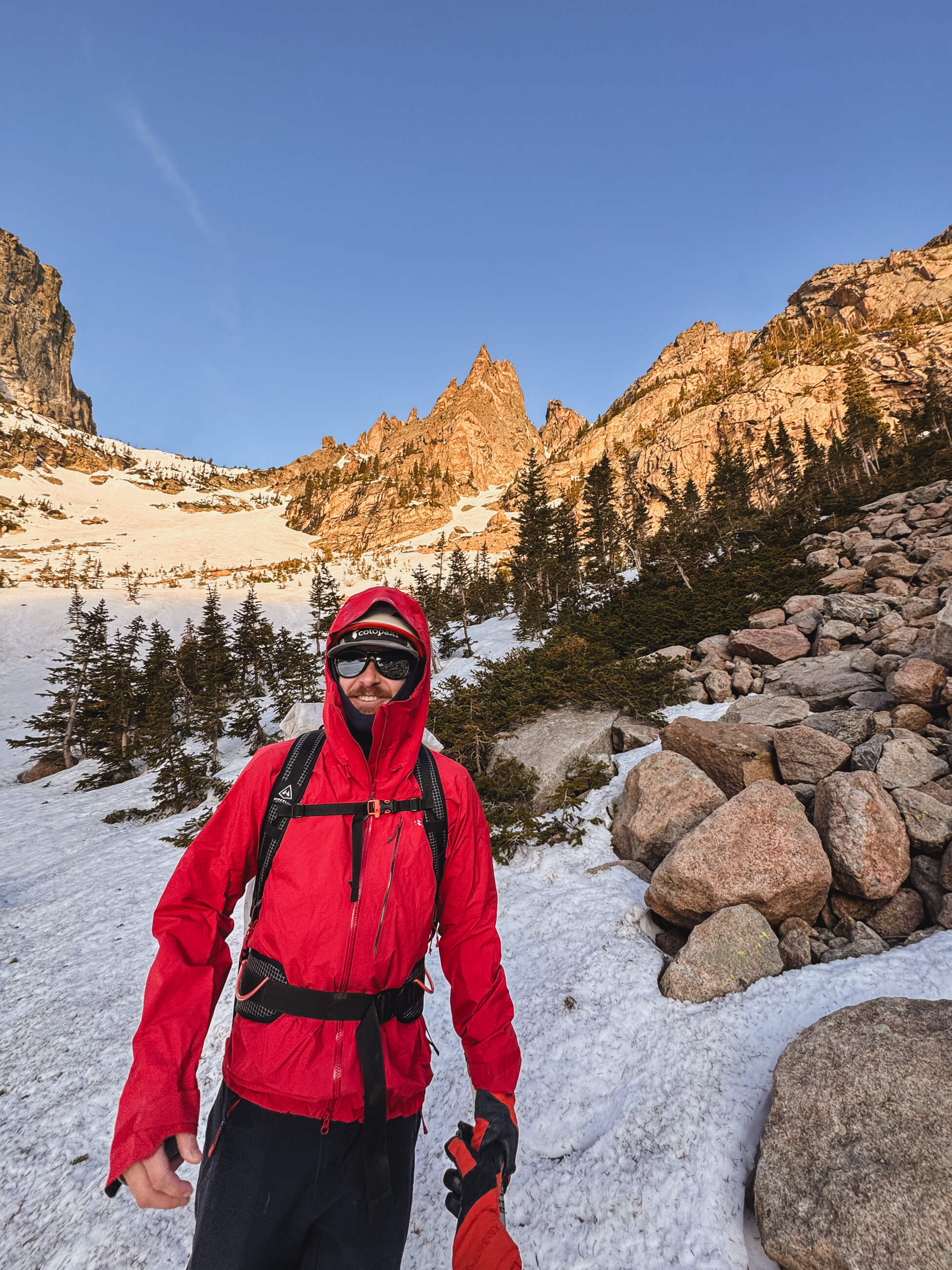
Brian and I rolled up to the base of the couloir around 6:30am as the sun was starting to cast red light on the surrounding rock.
Brian and I rolled up to the base of the couloir around 6:30am as the sun was starting to cast red light on the surrounding rock. Lookers left of Dragon’s Tail Couloir is Hallett Peak, a gorgeous wall of rock that also ascends up from Emerald Lake. We put on crampons, beacons, helmets and started making our way up to the base. There were a few parties ahead of us, all skiers. 

We had checked the night before and the avalanche forecast was all green for the eastern side of the park, and had some caution for the western part of the park. The Dragon’s Tail Couloir is pretty much right on the divide in the forecasting so we opted to go early and exercise some caution. 
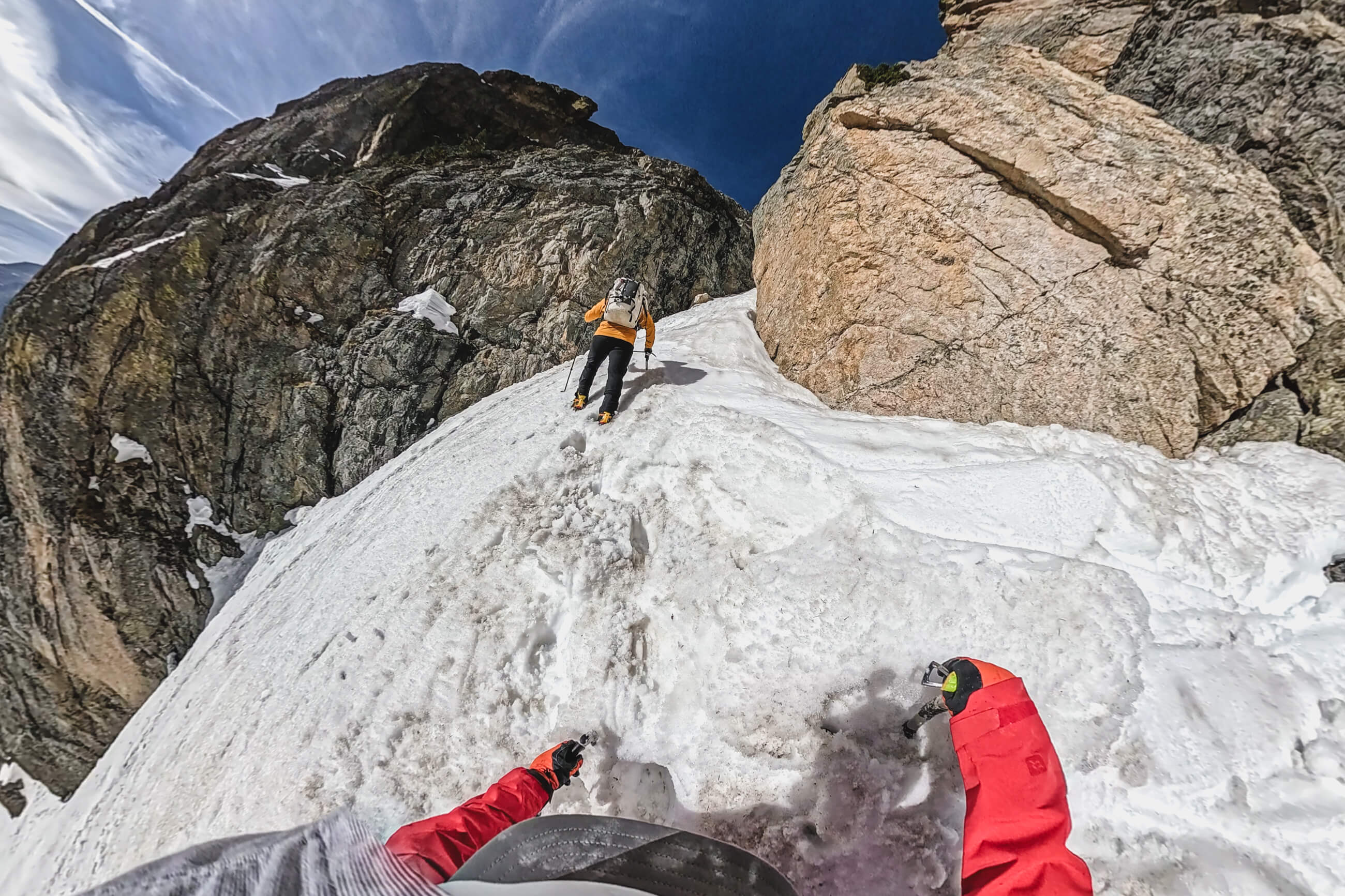
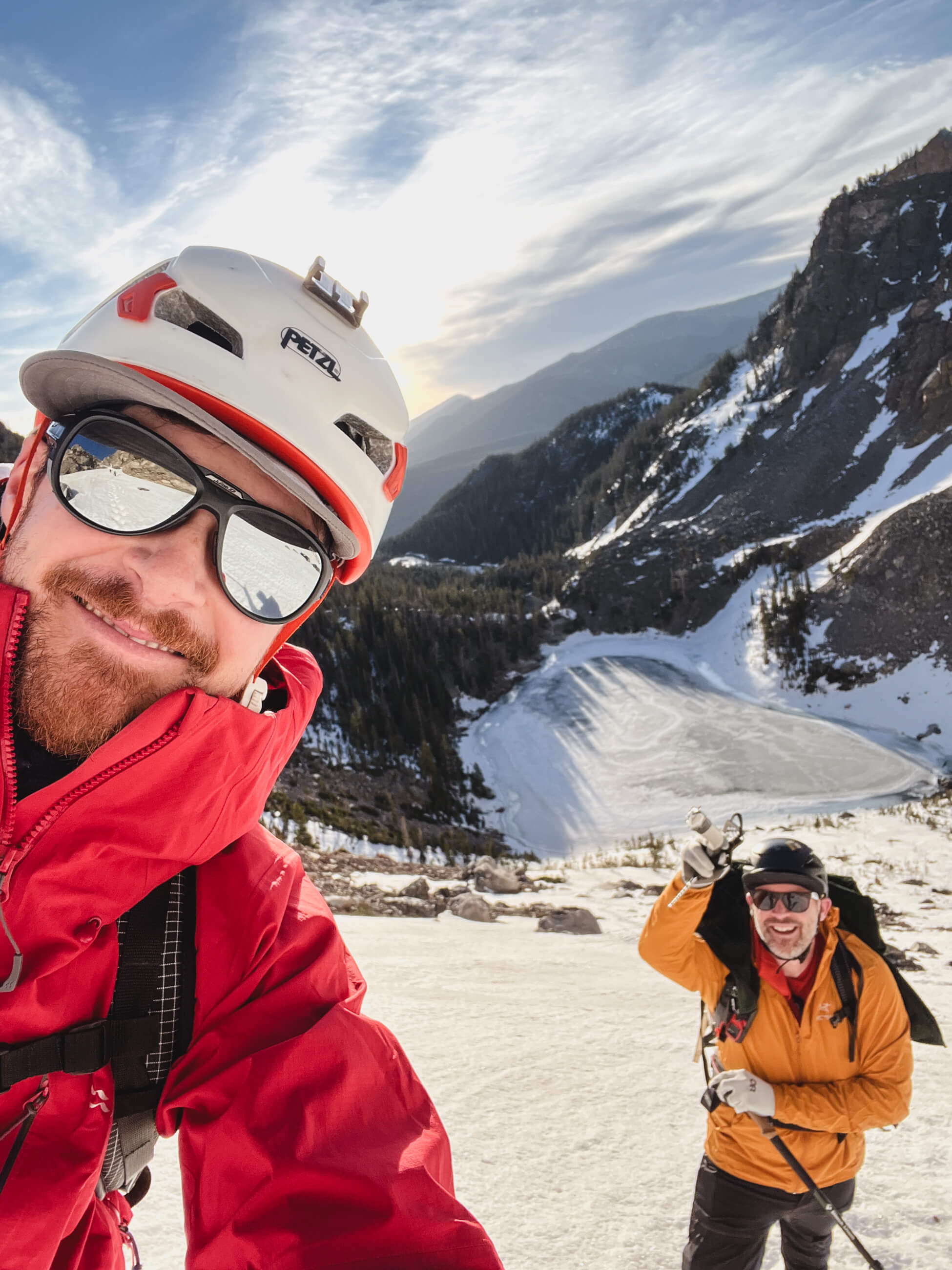
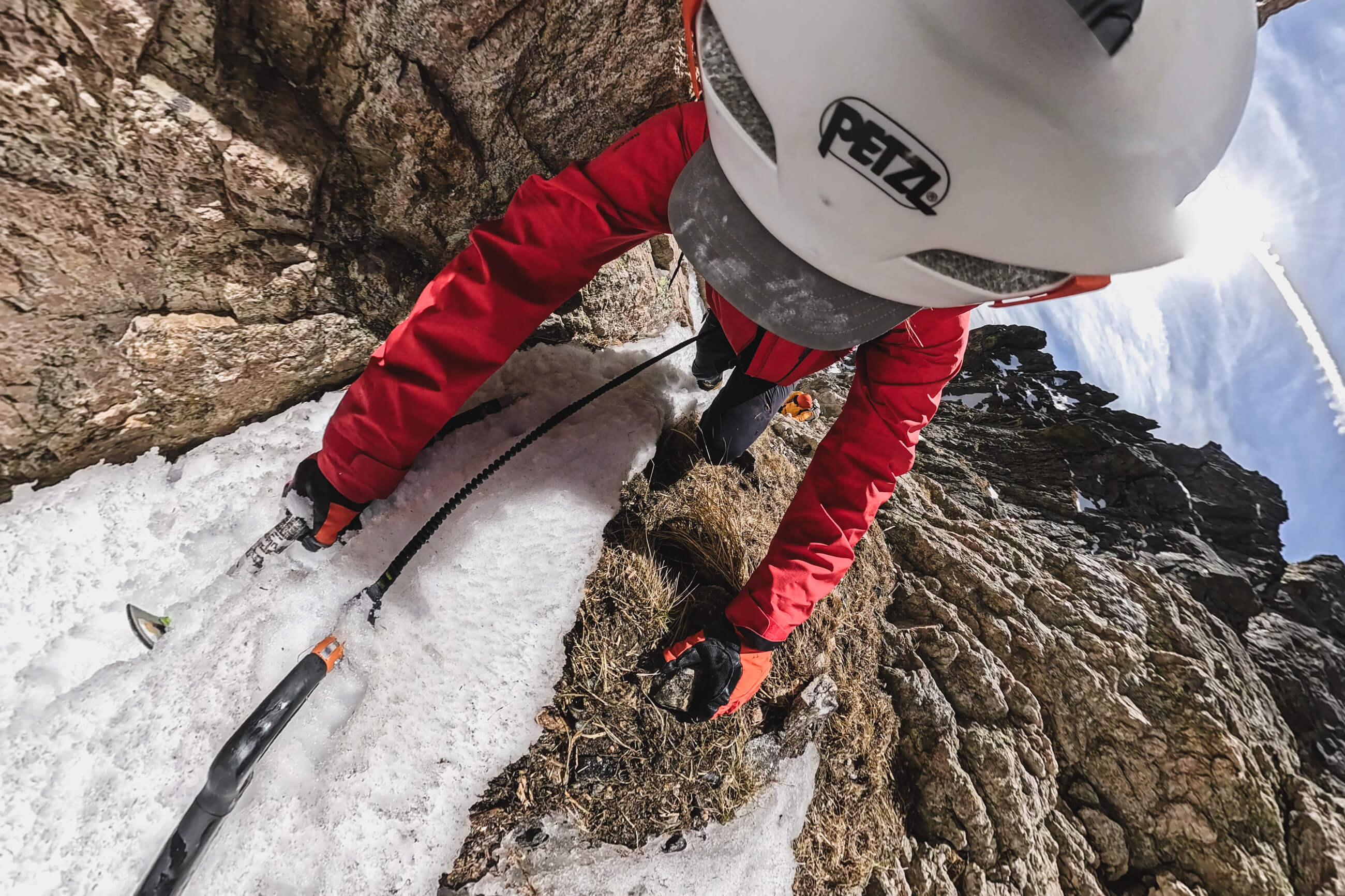
Dragon's Tail Couloir is just over my right shoulder below the pointy rock formation (image 1), Emerald Lake behind me and Brian (image 2), video clips of the mixed terrain
Not thirty minutes into the climb a guy in the group in front of us lost his footing, slipped, and flew by us on the slope until he came to a sudden stop in the rocks below. Thankfully (and miraculously) he walked away with only some cuts, road rash, and bruises. It was a scary reminder how fast you can get going on these slopes and to always wear crampons and a helmet!
The first 500 feet or so is about a 40-50 degree pitch. There was a super solid bootpack which made the ascent much easier and significantly less sketchy.
We reached the fork of the coulair after an hour or so and perched on a rocky outcropping with another pair that was skiing down from there. This seemed to be the last logical point to ski down from.  Above this point the couloir got significantly narrower, steeper, and had a pretty large section of crappy rock from the poor snow coverage this winter. 

A snowboarder had told us that a few parties earlier in the morning had climbed up and through the top of the couloir and it was significantly better to take the left fork instead of the right fork. Apparently the right fork had a bit of a cornice at the top. From the perch Brian and I ascended left and climbed another ~200 feet of steeper snow before reaching a very crumbly band of rock.
Video clips of the last (and steepest) sections at the very top of the couloir before we topped out
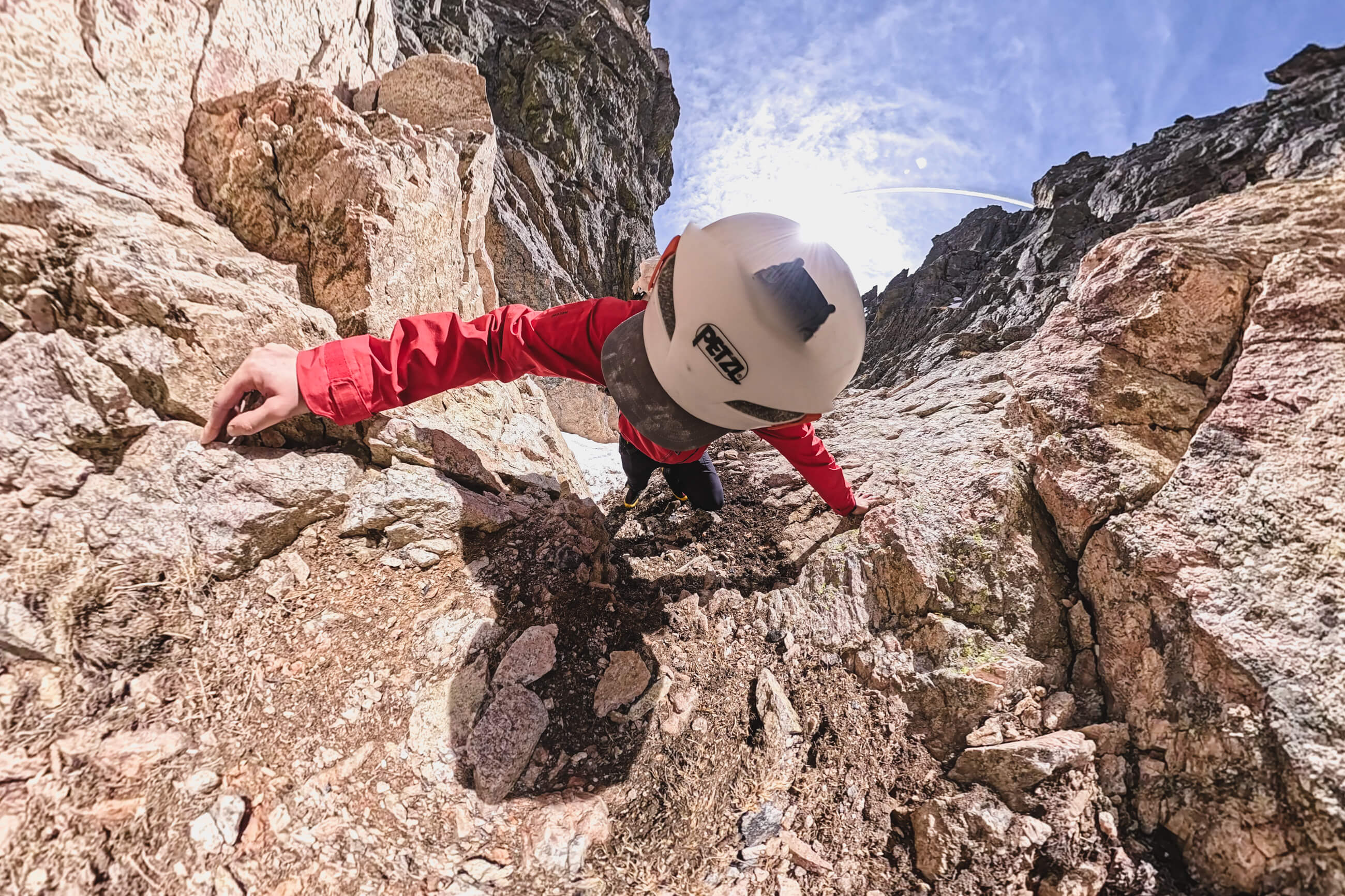
We could see some patches of snow above and after assessing the viability of a few different ways we kept left and scrambled over about 50 feet of the steep 4th class rock.
We had to take the crampons off and stash the ice tools for this and it was tricky in the big double boots. The rock was absolute garbage and we had to be super careful to test every hand and foot hold. It was really slow going.  

After the first stretch of rock there was another 100 feet of steep snow so we put the crampons back on. The top of the section was by far the scariest moment and crux of the upper route. Not sure on the degree but this felt steeper than anything else we had been on to that point. There wasn’t enough snow to keep climbing left with the tools so Brian found a way up and over some of the wet rock so we could keep making our way to the left. From here we could see the last 50 feet of snow that would bring us up and over. 

It was a relief to top out for sure. The route from bottom to top is about 1,700 feet. From the top we descended back to parking lot on the very tame by comparison Flattop Mountain Trail.